 Suite 2, Level 5, 66-80 Pacific Highway,
Dementia care
Geriatricians work with you to create a personalised dementia care plan.
Plans are regularly reviewed and adapted to your needs to promote independence and quality of life.
You will receive in-depth care from a specialist with the expertise to give you clarity about how to manage your specific symptoms of dementia. The management plan will cover lifestyle changes, medications and discuss your options for aged care supports.
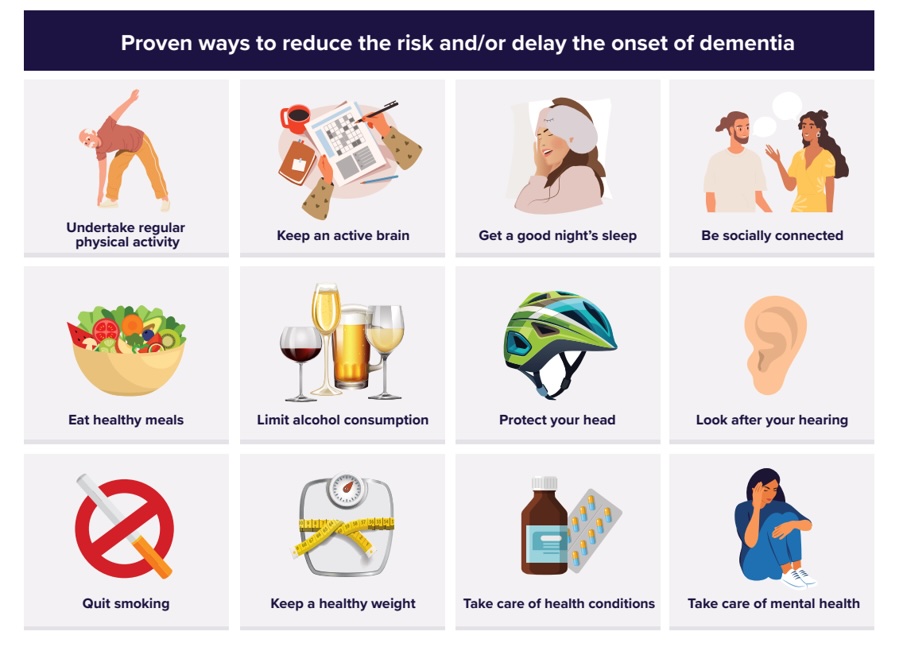
Delaying the onset of dementia
Dementia is not a normal part of ageing, but fortunately there are things that you can do to delay progression. There are many reversible risk factors that can be addressed at every age including hearing checks, physical activity and taking care of your medical conditions
Understanding Mild Cognitive Impairment
Understanding Delirium
Delirium is an acute, fluctuating change in attention and thinking often triggered by infection, injury, medication, or pain.
People with dementia are more prone to getting delirious. People with lower cognitive reserve can get delirium from minor changes such as urinary tract infections or a change in environment.
Delirium can affect conscious state (hyperactive or drowsiness) and has a variable duration of days to weeks.
Treating the underlying cause often improves delirium. It can be helpful to screen for:
- Infections
- Pain
- Hunger/thirst
- Constipation/diarrhoea
- Sleep-wake cycle disruption
- Medication side-effects
- Confusing environment
Understanding Dementia
Dementia is an umbrella term for several conditions that cause progressive cognitive decline affecting daily activities. The most common types are Alzheimer’s, Vascular and Mixed Dementia. Others include Parkinson’s, Lewy Body and Frontotemporal Dementia.
Symptoms develop gradually over months to years and affects different aspects of daily functioning and thinking. Cognition problems present in different ways for different people.
Alzheimer’s Dementia typically affects:
- Memory
- Language and communication skills
- Visuospatial skills
- Executive function e.g. planning tasks
- Social behaviour
Medications for Alzheimer’s Dementia
1. First line treatment: Acetylcholinesterase Inhibitors
- Acetylcholine is a neurotransmitter in the brain that allows nerve cells to talk to each other. People with Alzheimer’s dementia have less acetylcholine in the brain.
- Acetylcholinesterase inhibitors increase this neurotransmitter in the brain called acetylcholine to boost memory for longer temporarily. Between 40-70% of people find some benefit. The medications are generally more effective in mild-moderate Alzheimer’s dementia and less effective when dementia is severe.
- There are 3 acetylcholinesterase medications with similar efficacy:
- Donepezil
- Galantamine
- Rivastigmine capsule or patch
- There are 3 acetylcholinesterase medications with similar efficacy:
- Side effects affect around 1 in 10 people and can include nausea, vomiting or diarrhoea which often gets better after a short time. A rare but potentially serious side effect can be a slow heart rate.
2. Second line treatment: Memantine
- People with Alzheimer’s disease can have too much of a neurotransmitter called glutamate which can damage nerve cells (overactivation). Memantine protects the nerve cells by blocking the glutamate NMDA receptor.
- Memantine can be added to an acetylcholinesterase inhibitor in moderate Alzheimer’s disease to have a small improvement in cognition.
Carer education
Education for carers improves the quality of life for people with dementia. A key principle in the compassionate dementia care is actively including the person and their loved ones in decisions that impact their daily lives.
Many people with dementia can live safely at home with good social supports. Some people with dementia may benefit from support in a residential aged care home. If you are interested in taking a free online course, check out Understanding Dementia or Preventing Dementia (University of Tasmania MOOC). There are also organisations that directly support carers such as Dementia Australia, Dementia Support Australia and Carer Gateway.