 Suite 2, Level 5, 66-80 Pacific Highway,
AGED CARE RESOURCES
Navigating aged care services and support can feel overwhelming – especially during times of change. At Integrated Neurology, we’re committed to helping older people, families, and carers access trusted information and practical support services.
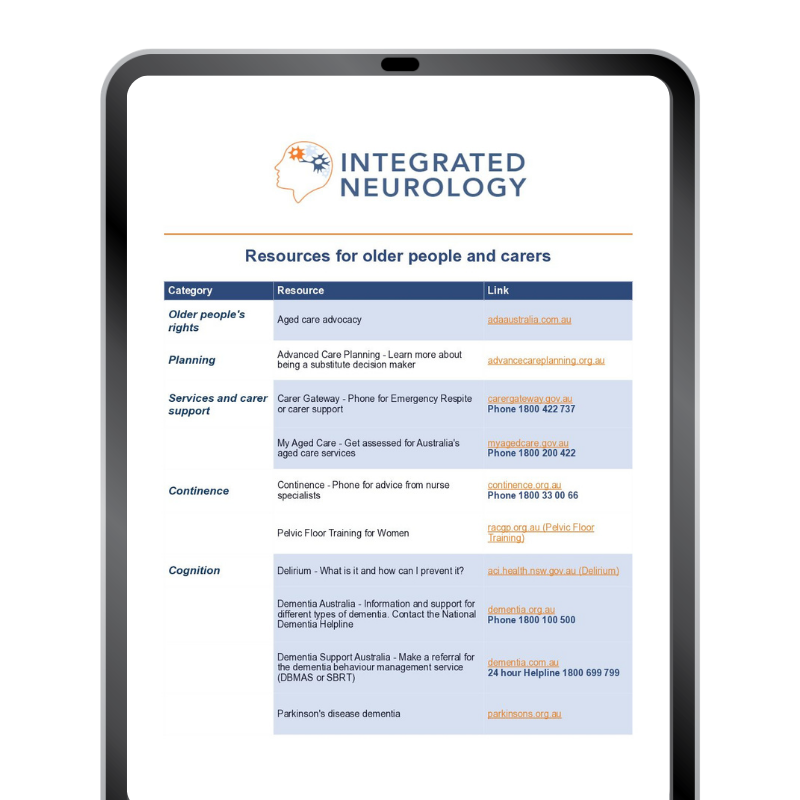
Download our helpful Aged Care Resources guide below, featuring links and contact details for advocacy services, care planning, dementia support, continence resources, respite services, and more.
Aged Care Supports
There are many options for aged care supports in Australia and your geriatrician can provide guidance for your situation. Some aged care support options include:
Private carers
There are several private care providers in Sydney that you can hire for additional help. This may be beneficial for some people who choose to have additional support to their MyAgedCare services or those who are waiting for or not yet eligible for services. Hourly costs can vary for the services provided, and the time of day. Some providers have live-in carer options if this suits your situation.
Commonwealth Home Support Program (CHSP)
The Commonwealth Home Support Program helps you access entry-level support services to life independently and safely at home.
You can apply by contacting MyAgedCare. If you’re approved you could get services such as meals, personal care, nursing care, allied health or respite.
Support At Home
(Formerly known as Home Care Packages)
- Support At Home Classifications 1 to 8 (previously called Home Care Packages Level 1 to 4) provide you with home care services subsidised by the Australian Government.
- Support At Home may include:
- Clinical supports e.g. nursing care, occupational therapy and podiatry
- Independence support e.g. help with showering, taking medications, transport and respite care
- Everyday living e.g. cleaning, gardening, shopping and meal preparation.
- Based on your individual needs, you may be approved for assistive technology and home modifications.
Aged Care Homes
(Residential Aged Care)
- Moving home into aged care can be helpful for older people and their families if there is a need for a more supported environment. Aged care homes provide accommodation, daily living services (meals, cleaning), nursing care and personal care. In addition, they provide opportunities for social and physical activities for residents.
- Staying at an Aged Care Home can be temporary (e.g. respite or the transition care program) or long-term.
- People may personalise their rooms with personal items and make it their home. Families and friends can visit and sometimes take residents out for outings.
- Aged care can relieve stressors that older people and their carers face by providing a lot of services in one place.
- Doctors such as GPs and Geriatricians can also provide medical care by visiting aged care homes. Dr Giselle Bennett provides aged care home visits.
- How much it costs to live in Aged Care depends on the place, your income and assets assessment and any optional goods and services. You can get an estimate on the MyAgedCare.gov.au website.